
If you are choosing a new way to watch television, you have probably noticed that the old TV model is changing quickly. The debate around IPTV vs traditional TV is no longer just about technology; it is about cost, flexibility, channel choice, reliability and the way people watch entertainment today. In the UK, viewers can still enjoy Freeview, satellite and cable services, while internet-based television and streaming are becoming increasingly important.
Ofcom’s latest Media Nations research shows that weekly broadcast-TV reach continues to decline, while broadcaster video-on-demand viewing is growing. At the same time, traditional broadcaster content still represents a major share of video watched in UK homes. That means there is no single answer for everyone: the best option depends on your budget, internet connection and viewing habits.
What Is IPTV?
IPTV stands for Internet Protocol Television. Understanding IPTV vs traditional TV starts with how each service delivers its signal.
Instead of receiving television programming primarily through an aerial, satellite dish or cable connection, IPTV delivers television content over an internet connection.
In the UK, IPTV can refer to legitimate television services delivered through internet networks, including services offered by broadband and pay-TV providers. Ofcom explains that some TV channels can be delivered through the internet to smart TVs and other connected devices.
It is important to distinguish legitimate IPTV services from unauthorised services that redistribute copyrighted channels without permission. Before subscribing, check that a provider has the appropriate rights to distribute the content.
What Is Traditional TV?
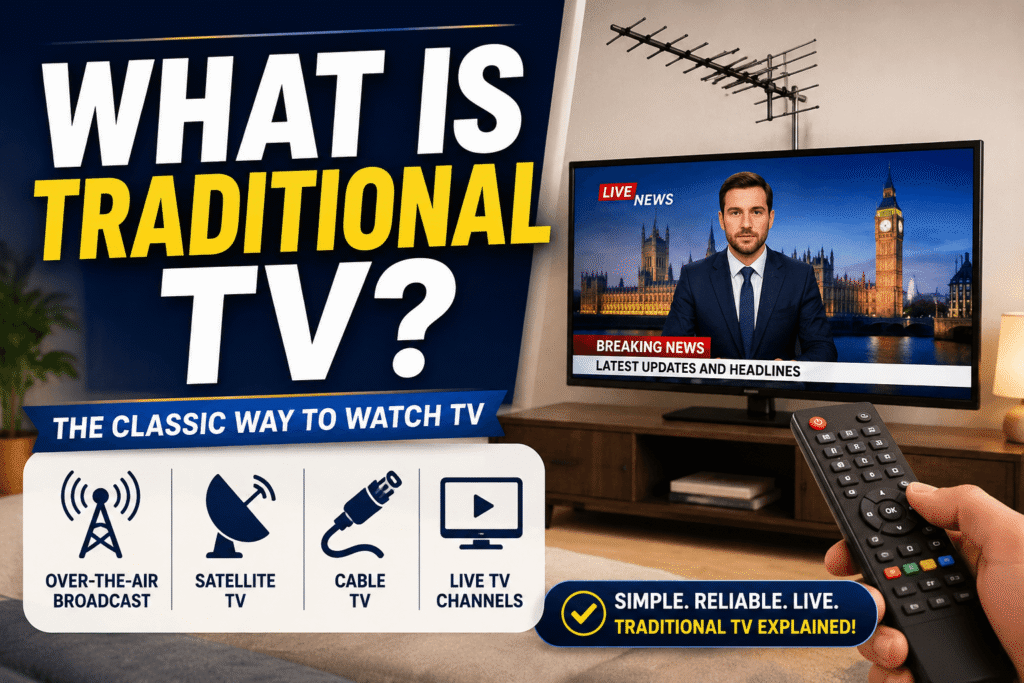
Traditional TV generally refers to television delivered through established broadcast or pay-TV systems. In the UK, this can include Freeview through an aerial, satellite television and cable television.
Traditional television is designed around scheduled channels. You tune into a channel and watch programmes as they are broadcast, although modern services often add recording, catch-up and on-demand features.
The changing relationship between broadcast and internet television is clear in the UK. Ofcom reports that broadcaster content remains the majority of in-home video viewing, even though linear TV viewing continues to fall.
IPTV vs traditional TV: The Main Differences
The biggest differences are the way content is delivered, how much control viewers have and what equipment is required. This is the foundation of the IPTV vs traditional TV comparison.
With traditional TV, the signal normally comes through an aerial, satellite or cable network. With IPTV, content is delivered through an internet connection. This means your broadband quality becomes an important part of the viewing experience.
Another major difference is flexibility. Internet-based television can make it easier to combine live television with catch-up, on-demand programming and multi-device viewing. Traditional TV can also provide these features, but the exact options depend on the provider and package.
Channel Choice and Content
One of the biggest attractions of internet-based television is the potential for a broad range of content. Depending on the service, viewers may have access to live channels, catch-up programmes, films, documentaries and international content.
However, more channels do not automatically mean better value. A large channel list may include many stations you never watch.
For UK households, the smartest approach is to compare the channels and programmes you actually use rather than choosing a service based only on the size of its channel list. That makes IPTV vs traditional TV a practical value question, not just a technology question.
Cost and Value for Money
Cost is often central to the IPTV vs traditional TV decision.
Traditional TV can range from free-to-air television to premium satellite and cable packages. A basic setup may have relatively low ongoing costs, while premium sports, entertainment and movie packages can become expensive.
IPTV can offer different pricing structures. Some legitimate services are included with broadband packages, while others use monthly subscriptions or pay-as-you-go models.
The cheapest option is not always the best option. A slightly more expensive service may provide better reliability, support and content.
Before signing up, compare:
- Monthly subscription fees
- Installation or equipment costs
- Contract length
- Extra charges for premium channels
- Number of supported devices
- Cancellation terms
- Whether catch-up and recording are included
Picture Quality and Reliability
Both IPTV and traditional TV can provide excellent picture quality, including HD and, where supported, 4K.
The difference is how the service responds to technical problems. This is another important part of IPTV vs traditional TV for households that need consistent viewing.
With IPTV, your internet connection can directly affect streaming quality. Slow broadband, Wi-Fi congestion or network problems may lead to buffering or reduced picture quality.
Traditional broadcast services are less dependent on your home broadband connection. If your aerial, satellite dish or cable connection is working properly, internet problems generally do not affect the television signal.
This is one of the most important points in the IPTV vs traditional TV comparison. For viewers with unreliable broadband, IPTV vs traditional TV may have a very clear winner.
Flexibility and Convenience
Modern viewers increasingly expect television to fit around their schedules. Internet television is particularly strong in this area because it can combine live channels with on-demand content.
You may be able to watch on a smart TV, streaming device, tablet, computer or smartphone, depending on the provider.
Ofcom reported that broadcaster-owned on-demand services such as BBC iPlayer and ITVX grew in 2026, showing that the distinction between traditional broadcasting and internet viewing is becoming less clear.
Internet Requirements
Internet access is a major consideration when comparing these options.
For IPTV, you need a stable internet connection. The required speed depends on the service, resolution and number of devices using the connection at the same time.
This is an important part of IPTV vs traditional TV because traditional broadcast television does not normally depend on your home broadband connection.
If your broadband is unreliable, consider whether a traditional aerial, satellite or cable option would give you a more consistent experience.
Ease of Setup
Traditional TV can be simple once installed. Freeview generally requires a compatible television or set-top box and an aerial connection. Satellite services require appropriate equipment, while cable services depend on network availability.
IPTV setup varies widely. Legitimate services may offer a dedicated app, set-top box or smart-TV application. The setup can be straightforward, but users should always follow the provider’s official instructions.
Avoid services that ask you to install suspicious applications, disable security features or provide unusual payment methods. In IPTV vs traditional TV, legitimacy matters as much as convenience.
Sports and Live Events
For many UK viewers, live sport is a deciding factor.
Traditional broadcast and pay-TV services have historically been strong for major live events, including football and other popular sports. Internet delivery has also become increasingly important, with broadcasters and streaming platforms offering live coverage through connected devices.
Ofcom’s 2026 research highlights the continued importance of live viewing for major events. This shows that scheduled television is not disappearing simply because on-demand viewing is growing.
If sport is important to you, compare the legal rights available from each provider rather than simply comparing the number of channels. This can change the IPTV vs traditional TV decision significantly.
IPTV vs traditional TV: Which Is Better for Families?
Families often need a combination of live channels, children’s programming, catch-up content and parental controls.
Internet-based services can offer more flexibility, but parents should check exactly what content is available. Ofcom warns that internet-delivered channels accessed outside regulated electronic programme guides may not have the same protections as regulated broadcast channels.
For families, safety and reliability should come before getting the largest possible channel list. That principle is especially useful when weighing IPTV vs traditional TV.
Pros and Cons of IPTV
Advantages
- Flexible access across compatible devices
- Strong support for on-demand viewing
- Can combine live and recorded content
- Internet delivery can work without an aerial or satellite dish
- Convenient for viewers who already use connected devices
Disadvantages
- Requires a reliable internet connection
- Quality can be affected by network problems
- Some services may have confusing pricing
- Unauthorised providers can create legal and security risks
- Availability of channels depends on licensing and provider agreements
Pros and Cons of Traditional TV
Advantages
- Reliable broadcast delivery when the infrastructure is working
- Excellent option for live television
- Simple for viewers who prefer scheduled channels
- Free-to-air options are available
- Less dependent on home broadband
Disadvantages
- Less flexible than fully on-demand services
- Premium packages can become expensive
- Satellite or cable equipment may be required
- Traditional channel schedules may not suit modern viewing habits
IPTV vs traditional TV: What Should UK Viewers Choose?

There is no universal winner. The right IPTV vs traditional TV choice depends on what matters most to you.
Choose an internet-based TV service if you want flexible viewing, use several connected devices and have reliable broadband. This is where IPTV vs traditional TV often favours internet delivery.
Choose traditional TV if you value dependable live viewing, have limited or unreliable broadband, or prefer the simplicity of a conventional television setup.
For many households, the best answer is a hybrid approach. You can use Freeview or another broadcast service for live channels while using legitimate online services for catch-up, films, series and additional entertainment.
How to Choose the Right TV Service
Before signing up, ask yourself these questions:
- Which channels do I actually watch?
- Do I mainly watch live TV or on-demand content?
- How reliable is my broadband?
- How many people will use the service?
- Do I need sports or premium entertainment?
- Do I need to watch on multiple devices?
- What is the total monthly cost?
- Is the provider legitimate and transparent?
This simple checklist can prevent you from paying for channels or features you never use.
FAQ
Is IPTV better than traditional TV in the UK?
It depends on your needs. IPTV can provide more flexibility and on-demand access, while traditional TV can be more dependable for viewers with weak broadband or those who prefer scheduled channels.
Does IPTV require broadband?
Yes. Internet-delivered IPTV requires an internet connection. The quality of your broadband and home network can affect the viewing experience.
Is IPTV legal in the UK?
IPTV technology itself is legal. The important issue is whether the provider has permission to distribute the content. Consumers should avoid services offering copyrighted premium channels without clear licensing.
Can I watch IPTV on a Smart TV?
Many legitimate IPTV and streaming services support compatible smart TVs. Availability depends on the provider, television model and official app.
Do I need a TV Licence?
UK TV licensing rules depend on what you watch and how you watch it. You generally need to be covered by a TV Licence if you watch or record live television on any channel or service, and BBC iPlayer also requires a licence.
For the latest rules, always check the official guidance from TV Licensing.
Can IPTV replace Freeview?
For some households, internet-based services can replace part of the role traditionally played by Freeview. However, the right choice depends on your preferred channels, internet connection and budget.
Conclusion
The IPTV vs traditional TV debate is really about how television is changing. Traditional broadcasting remains valuable for live events, dependable access and familiar channel-based viewing, while internet television offers flexibility, on-demand content and multi-device convenience. Ultimately, IPTV vs traditional TV comes down to matching the technology to your habits.
The UK market is moving towards a mixed viewing model rather than one technology completely replacing another. Ofcom’s latest research shows that broadcaster content remains important even as online video and connected-TV viewing continue to grow.
Before choosing a service, compare the real monthly cost, channel availability, picture quality, internet requirements and legal status. Most importantly, choose a legitimate provider and avoid offers that seem too good to be true.
For most UK viewers, the smartest approach is not simply choosing one side. Build a TV setup around the content you actually watch, the internet connection you have and the budget you are comfortable with.